How to Check Tire Pressure With a Gauge
Find the correct cold tire pressure, use a gauge on all four tires and know when a recurring low reading needs service.
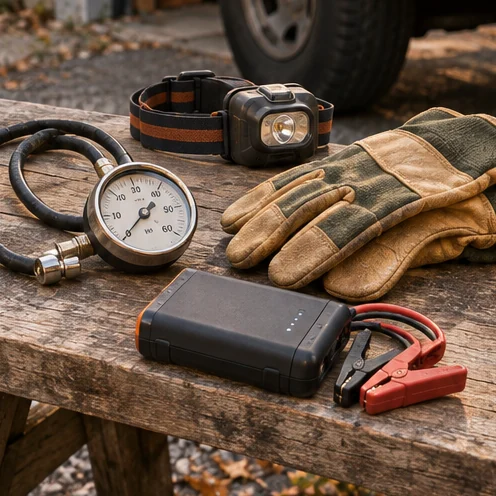
Check tire pressure with a gauge when the tires are cold, ideally after the vehicle has been parked for at least three hours. Use the vehicle’s recommended pressures on the driver-side door placard or in the owner’s manual. Check all four tires, record the readings and adjust them to the listed values. Check the spare separately if you have one.
Find the numbers for your vehicle
Open the driver’s door and look for the tire and loading information label. Check whether the front and rear values differ or the manual gives different values for a particular load or approved setup. The pressure molded into a tire sidewall describes the tire’s limit. The vehicle placard tells you what the car manufacturer specifies for the fitment. Write the right figures down before you go from tire to tire.
Get four repeatable readings
Remove the valve cap, seat the gauge straight on the valve and press until the brief hiss stops. A continued hiss means the gauge may not be seated. Reset the gauge and try again if a reading seems odd. A stick gauge holds a reading until you push the stem back in, while a digital unit may turn itself off between tires. Label readings front left, front right, rear left and rear right in your notes so you can compare the same tire next time.
Adjust a little at a time
If a cold tire needs air, add a short burst and remeasure. Check your compressor instructions and do not leave it running unattended. If a cold tire is above the specified value, use the gauge’s bleed valve if equipped, then recheck before replacing the valve cap. If you had to pull into a station on warm tires because one appeared low, follow NHTSA’s guidance to fill to the recommended cold pressure and recheck when cold. Avoid bleeding an otherwise correctly inflated warm tire simply to match its cold specification.
Decide whether a tire needs service
Check pressure monthly and before a long drive. If one tire consistently drops more than the others, have it inspected even if topping it off clears a dashboard warning. Cuts, exposed cords, bubbles or a rapid loss of air call for professional help. If a warning appears while the car feels unstable, find a safe place to stop before inspecting it.
Frequently asked questions
Why check pressure when the car has a tire warning system?
A warning can come after a tire is already significantly underinflated. A manual gauge helps you see smaller differences before a warning triggers.
Does a temporary spare take the same pressure?
It can take a different pressure. Check the specific instructions for the spare in the manual and on the tire’s applicable markings.
Reference: NHTSA TireWise