What to Put in a Car Emergency Kit for Everyday Driving
Build a roadside kit for an ordinary breakdown. Pack light, phone power, water, first aid and tire equipment suited to your car.
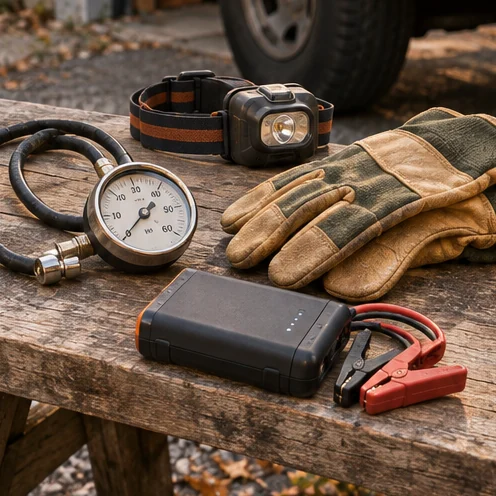
Pack a car emergency kit around your first few decisions after a breakdown: get out of traffic if possible, make a call, give an accurate location and wait somewhere safer. A phone charger, flashlight, first-aid kit, gloves, drinking water and vehicle-specific tire supplies cover many ordinary trips. Build from there if your route has long stretches between services.
Set up a small bag you can grab
Pack a cable that fits your phone and a charged power bank you know how to use. Add a paper copy of your roadside-assistance number and insurance details. A flashlight and light-reflective layer are useful for being seen when you can use them without entering traffic. Keep a first-aid kit and any needed personal medication accessible, following the labeled storage instructions. If breakdowns usually mean waiting with kids, add familiar snacks and a change of clothes.
Know which tire setup you have
Find out whether your car has a full-size spare, temporary spare, inflator and sealant kit, or roadside assistance as its only practical option. A rented or recently bought car may surprise you. Check the vehicle manual for where the supplied equipment is kept and how it is used. Test spare pressure and read any expiry labels on sealant. Lay out the equipment in the driveway one afternoon so that a dark shoulder isn’t the first place you meet it.
Pack for the route and the people
Keep water and shelf-stable snacks available for the number of occupants. Carry warm layers for a trip across temperature zones even if it’s pleasant at home. Bring a paper map or downloaded navigation where cell service is weak. Secure heavier gear low and out of passenger footwells. A weekly commuter might use one small tote, while a remote desert drive calls for a bigger water and cooling plan.
Plan your first actions after a breakdown
If it is safe, move out of traffic and turn on the hazard lights. Give roadside assistance your direction of travel, nearest marker or named exit and the number of people in the car. Follow dispatcher instructions about where to wait. If the vehicle is in an active lane or someone is in immediate danger, call 911. No item in this kit makes it safe to work on a car in moving traffic or to cross a highway on foot to find help.
Frequently asked questions
Should the roadside kit stay in the trunk?
Keep tools secured in the cargo area. Keep the phone, light and contact details where an occupant can safely retrieve them if the hatch is blocked.
Which items need regular replacement or charging?
Review batteries, water, food, personal supplies and dated tire sealant. Test the charger and any flashlight before you need them.
Reference: FEMA winter preparedness guide · NHTSA summer driving guidance