Driving in Fog: Which Lights to Use and When to Pull Off
Use low beams in fog, leave more stopping room and choose a safe place entirely out of traffic when visibility deteriorates.
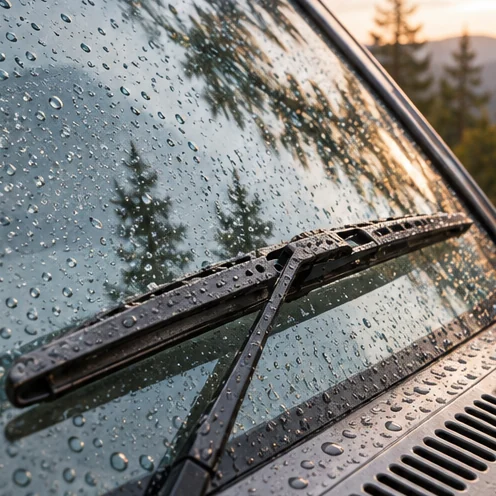
Use low-beam headlights in fog, slow down before visibility drops and give yourself enough distance to stop within the roadway you can see. High beams can create more glare. If fog becomes too dense to continue, get completely out of moving traffic and stop in a safe location, such as an open parking lot.
Check the valley and the destination
Fog can be patchy and may collect near water, at a low crossing or at the bottom of a hill. See whether your route has a dense fog advisory before departure. On a flexible day, waiting for the advisory to clear can make the trip straightforward. A passenger can read alerts while you drive, and you can pull into an open lot before checking a phone when traveling alone.
Use lights that help you see and be seen
Switch on low beams and confirm which setting also lights the rear of your vehicle. Some daytime running lights leave the rear dark. Use the manufacturer’s fog lamps if equipped and permitted. Do not switch to high beams to see into dense fog. Moisture reflects light back toward you. If the windshield is misted inside, use the defogger, and if moisture is outside, use the wipers.
Change pace and reduce decisions
Leave more space in front of you than usual and slow smoothly. Track visible lane markings rather than relying on the car ahead to guide you. Avoid passing in poor visibility. Traffic can be stopped where you expect it to be moving. Give yourself time to recognize a curve, crossing, pedestrian or a vehicle without lights. If you begin to feel that the only thing you can see is someone else’s taillights, look for a suitable exit or other safe stopping point.
Stop out of the travel path
Choose a safe lot or a turnout with room fully away from the travel lanes. On a fast road, a narrow shoulder can be especially hazardous in dense fog. If you cannot continue and no lot or driveway is available, the National Weather Service advises pulling as far out of the roadway as possible and keeping the hazard flashers on once stopped. Follow emergency instructions if your vehicle is disabled or there is immediate danger.
Frequently asked questions
Can navigation tell me how fast to drive through fog?
A map shows the route, while your actual visibility sets the pace. Drive only as conditions allow and stop if you can no longer continue safely.
Does stronger lighting clear condensation?
Use the defog settings and wipers as appropriate. Don’t use high beams to compensate for glass that needs clearing.