What to Keep in a Winter Car Emergency Kit
Pack a winter car emergency kit for cold delays with warm layers, light, phone power, water and a reachable snow brush.
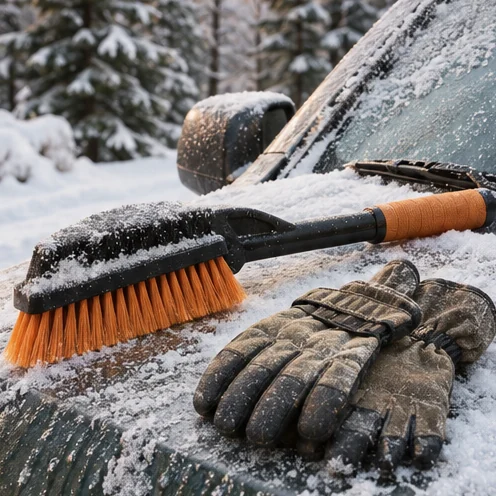
A winter car emergency kit should help you stay warm, stay visible and contact help while waiting in a parked vehicle. Start with warm layers and blankets, a flashlight, a phone charging option, food, water and a brush or scraper. Add the equipment your route and car actually call for, and stow the heaviest gear so it won’t move during a sudden stop.
Put warmth where you can reach it
Pack a blanket or sleeping bag, warm socks, a hat and a dry pair of gloves. Scale quantities to the number of people riding rather than assuming one blanket will cover the group. Keep personal medicines in the temperature range shown on their labels. If the car is generally parked outside, bring temperature-sensitive items and needed water from the house on trip day. A reusable tote near the cabin door makes that transfer easier.
Set up one way to call and one way to be found
A car cable is useful when an outlet works. A charged power bank adds an option when it does not. Keep a flashlight or headlamp somewhere you can reach without opening the cargo hatch. Save the roadside assistance number and your route offline. A passenger can note the last mile marker or intersection if conditions deteriorate. If you need emergency help, give your direction of travel and your best location description.
Fit tools to conditions
Carry a snow brush, ice scraper and small shovel for clearing light snow around the vehicle and tailpipe. A gauge can help before you leave, but a reading cannot substitute for a safe pull-off if a tire suddenly loses air. Pack a spare only if it’s part of your vehicle’s setup, and check your manual for guidance about sealing equipment and suitable traction devices. If you travel a cold remote road, build a larger food, water and warm clothing margin than you would for a short trip through town.
If you get stranded in snow
Call for help and follow dispatcher or local authority instructions. NHTSA advises staying with the vehicle if stranded in winter weather, making it visible and checking the exhaust area. If using the engine for warmth, make sure the exhaust is clear and run it only intermittently. Never rely on a candle, camp stove or heater with an open flame inside the car. Let the people expecting you know to contact authorities if you miss a predetermined check-in and cannot be reached.
Frequently asked questions
Can a jump pack live in the car all winter?
Read its charge, storage and operating-temperature instructions. Bring it indoors and take it on trip day if your car leaves the pack outside its approved range.
How often should I check the kit?
Do a full check at the first frost and before remote trips. Replace expired items and recharge whatever depends on a battery.
Reference: NHTSA winter driving guidance · FEMA winter preparedness guide