How to Choose and Set Up a Trunk Organizer
Measure your cargo area and choose a trunk organizer that fits, keeps essentials available, and can be secured.
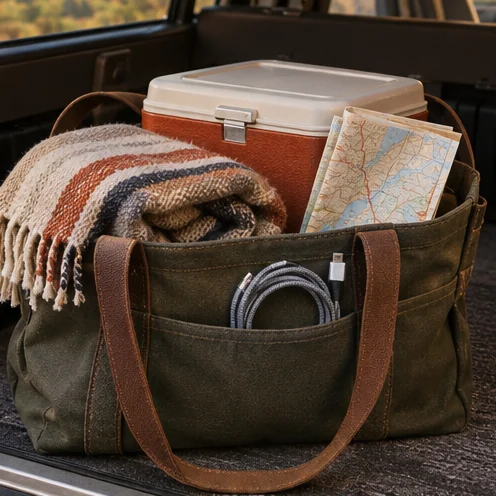
Choose a trunk organizer after measuring the space you’ll actually use. A two- or three-section model usually makes more sense than a full-width bin if you also carry suitcases. Secure the organizer and separately restrain heavy items that could break through its dividers or move in a sudden stop.
Measure these places before shopping
Measure the floor between the narrowest points, often the wheel wells. Check the organizer’s depth with seats in their usual position, and check height under the cargo cover or rear-window sightline. Then open the hatch and see whether you can reach the straps, see the contents and lift the bin out. Check whether a spare tire, charging cable or storage well needs access underneath.
Write down the positions and types of cargo points before choosing a strap system. Use only the attachment locations specified in the vehicle and product instructions. A non-slip base can reduce ordinary movement but doesn’t replace approved restraint. NHTSA secure-your-load guidance
| Your usual load | A useful layout | What to check |
|---|---|---|
| Grocery bags and daily gear | Fold-flat organizer with removable divider | Room for a bag to stand upright |
| Family travel | Two compartments, with one left partly empty | Rear visibility and access to the day bag |
| Wet or dirty equipment | Washable bin or a removable liner | Drying space and independent restraint for anything heavy |
Set it up so it stays useful
Put durable light supplies in the organizers, such as reusable shopping bags, gentle cleaning cloths and a small pouch of frequently used items. Place denser loads like a full cooler and luggage separately low, secured as the vehicle allows. Don’t leave glass or hard tools loose at the top of the bin. Don’t strap items to child-seat anchor points unless the vehicle manual explicitly allows it.
Do a parked test with your usual luggage. Open the hatch, take out the item you use most, put it back and close the hatch fully. Move the divider if you have to pull out the entire bin each time. After loading, confirm mirrors and rear visibility remain usable.
Compare fold-flat versions, lined bins and dividers based on the measurements you took.
FAQ
Can an organizer protect cargo during a crash? Ordinary organizer dividers and handles are for storage. Follow rated restraint guidance for the organizer and vehicle separately.
Should I leave it installed every day? Only if it stays in a secure place and doesn’t block access to important equipment. Fold or remove it for trips where it has no useful role.